How to Rank in the Google Local 3-Pack for Water Damage Leads
A field guide to owning the Google Local 3-Pack when homeowners search "water damage near me" at 2 AM.
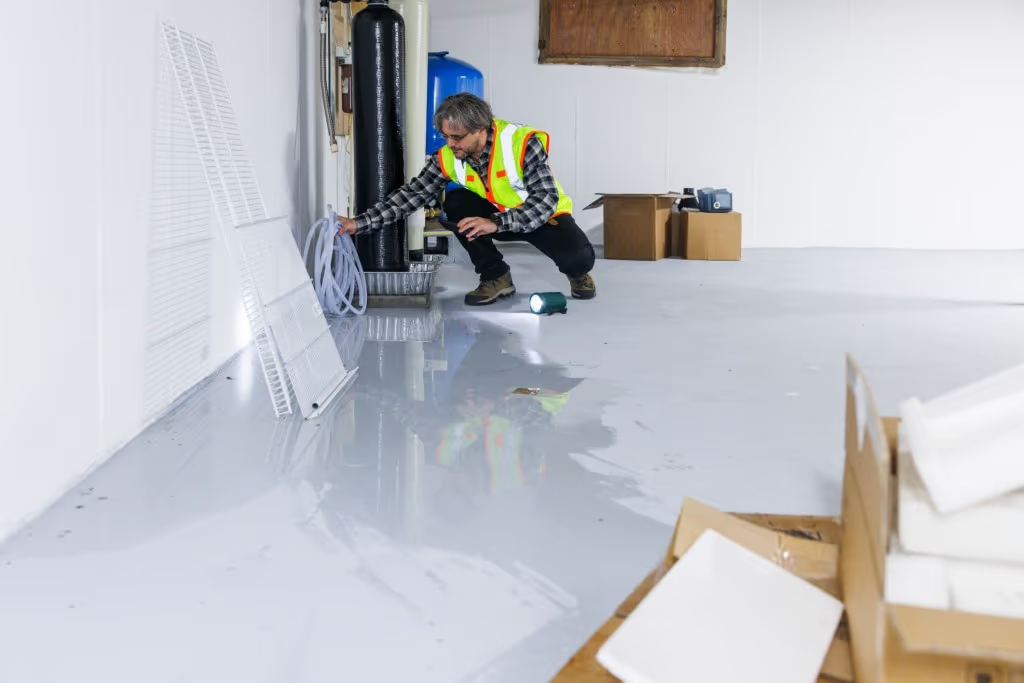
If you own an independent damage restoration company, you already know the harsh reality of digital marketing in this industry. The competition is cutthroat, the cost-per-click for Google Ads is astronomically high, and lead generation platforms often sell the same frantic customer to four different contractors.
When a homeowner is standing ankle-deep in Category 3 water, they aren't reading 2,000-word blog posts about the history of plumbing. They are panicked, they are in a rush, and they are pulling out their smartphone to find the fastest, most reliable help available.
They type "water damage near me" into Google. What happens next dictates whether your truck rolls out or sits idle in the warehouse.
If your business isn't showing up in the Google Local 3-Pack—the three map listings pinned to the top of the search results—you are virtually invisible. In this comprehensive guide, we are going to break down exactly how you can dominate the Map Pack, bypass the national franchises, and secure high-intent emergency water damage leads.
For a broader overview of how local search functions, you can check out our Ultimate Guide to Local SEO for Restoration Companies. But right now, we are going deep into the trenches of Map Pack optimization specifically for the restoration industry.
The Urgency Factor: Why the Map Pack is Everything
In the restoration industry, search intent is everything. There is a massive difference between a homeowner searching for "how to clean soot webbing" and one searching for "emergency water extraction." The first is looking for a DIY tutorial; the second is experiencing a disaster and has their credit card in hand.
When that 2 AM flooded basement search happens, Google understands the urgency. That is exactly why the search engine prioritizes the Local 3-Pack above the standard organic website links.
Here is why the Map Pack dominates emergency restoration queries:
Mobile SERP · water damage near me
Click-to-call sits inside the search results. Homeowners dispatch your crew without ever loading your website.
Star ratings dominate the fold. A panicked homeowner gravitates to the 4.9-star listing with 150 reviews.
On mobile, the Map Pack owns the viewport after paid ads. Fewer than 30% of searchers ever scroll to organic links.
You cannot afford to treat local SEO as an afterthought. If you aren't in those top three spots, you are relying entirely on expensive pay-per-click campaigns or sheer luck to keep your extractors running.
Proximity and Service Areas: Playing the Location Game
The single most heavily weighted ranking factor in the Google Local algorithm is proximity—the physical distance between the person making the search and the address of your business.
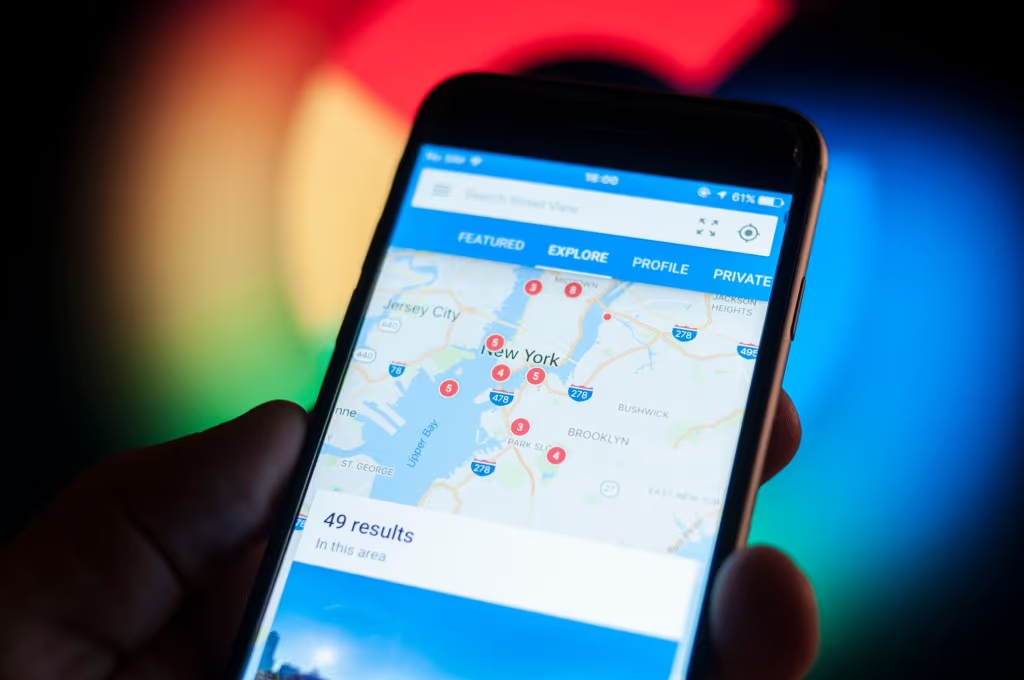
Google tracks the searcher's exact location using their phone's GPS or computer's IP address. If a homeowner is standing in a flooded kitchen in the wealthy northern suburbs, Google is going to show them restoration companies physically located near those suburbs.
The Physical Address Advantage
Many restoration contractors operate out of massive industrial warehouses on the outskirts of town where rent is cheap. While this makes operational sense, it is a local SEO nightmare.
Google heavily favors businesses with a physical address close to the searcher's location. If your shop is 25 miles away from your most lucrative target neighborhood, ranking in the Map Pack for that specific suburb will be an uphill battle.
Ranking power by distance from searcher
Tactical Proximity Strategies:
Target Your Exact City
Stop trying to rank one GBP across a 50-mile radius. Dominate the city where your address is registered first.
Strategic Office Placement
If your warehouse sits far from high-value neighborhoods, lease a legitimate office closer to that demographic and verify a new GBP there.
Respect SAB Limitations
Hiding your address and setting a Service Area does not move your ranking radius. Google still ranks from the verified physical address.
Nailing Your GBP Setup: Primary and Secondary Categories
One of the most common, yet fatal, mistakes we see independent restoration contractors make is miscategorizing their Google Business Profile. Google relies entirely on your chosen categories to understand what services you provide and when to trigger your listing.
If your primary category is wrong, you will not rank for water damage leads. It is that simple.
The "General Contractor" Trap
Many restoration owners select "General Contractor" or "Remodeling Contractor" as their primary category because they also do build-backs and reconstruction. This is a massive error.
When someone searches for a general contractor, they want a kitchen remodel or a deck built. When they have raw sewage backing up into their living room, they search for water damage experts. If Google sees you as a general contractor, it will bypass you in favor of companies properly categorized as emergency mitigators.
The Exact Categories You Need
To trigger the Map Pack for the most lucrative emergency searches, your GBP must be categorized with laser precision. Implement this category structure immediately:
Water Damage Restoration Service
Non-negotiable. This is what triggers emergency mitigation Map Pack queries.
Fire Damage Restoration Service
Expands coverage for fire and smoke emergency searches.
Mold Remediation Service
Captures post-water mold and remediation intent.
Sewage Disposal Service
Aligns you with Category 3 and black-water emergencies.
By dialing in these specific categories, you signal to Google's algorithm that you are the exact right answer for a frantic homeowner searching for mitigation, structural drying, and cleanup.
Local On-Page Signals: Backing Up Your Map Pack
Your Google Business Profile does not operate in a vacuum. Google's algorithm looks directly at the website linked to your GBP to verify your local authority. If your profile claims you do water damage in Chicago, but your website barely mentions Chicago or water damage, your Map Pack rankings will plummet.
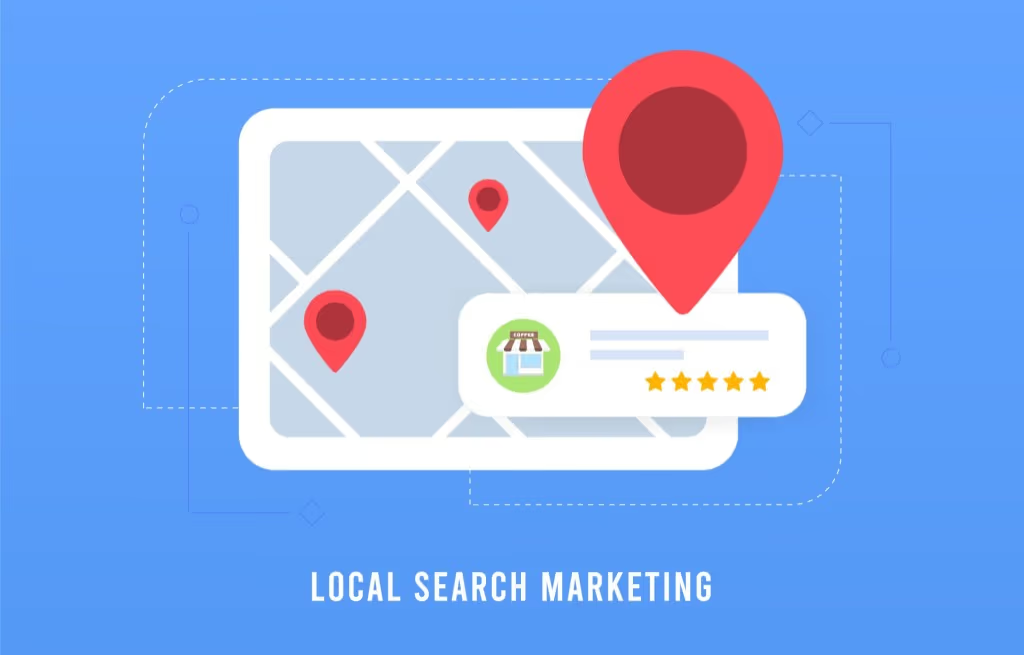
You must build robust "Local On-Page Signals" to validate your profile. This means creating dedicated, highly optimized location pages for the specific cities you want to dominate.
Stop Using Duplicated Template Pages
Do not create a single "Service Area" page that just lists 45 different towns in a bulleted list. Google ignores this tactic.
Instead, build a dedicated, comprehensive page for every major city you serve. A properly structured URL looks like this: yourdomain.com/water-damage-restoration-city-name/. These pages need unique, authoritative content that proves you actually work in that community.
What to include on a high-converting location page:
Local Project Details
Reference real jobs in that city—home types, weather patterns, and local building styles.
Industry Terminology
Speak like IICRC pros. Cite psychrometric data and structural drying—not vague “we dry houses” copy.
Trust Elements
Show branded trucks at recognizable local landmarks so Google and homeowners both see proof of presence.
Embed Google Maps and NAP Consistency
Every location page on your website must reinforce your physical presence.
Embed a live Google Map of your GBP directly onto the corresponding city page. This creates a hard technical link between your website and your Map listing.
Furthermore, you must ensure strict NAP (Name, Address, Phone Number) consistency. The way your business name, address, and phone number appear on your website must match your Google Business Profile down to the exact letter. If your GBP says "123 Main St." but your website says "123 Main Street," you are confusing the algorithm and diluting your ranking power.
LocalBusiness Schema Markup
Schema markup is a form of technical code added to the backend of your website. It speaks directly to search engines in their native language, removing any guesswork about who you are and where you operate.
For restoration companies, you must inject LocalBusiness schema markup onto your location pages. Your local schema should explicitly define:
- Exact geo-coordinates (latitude and longitude)
- Emergency 24/7 operating hours
- Accepted payment methods
- Links to social profiles and IICRC certification directories
When Google crawls your site and reads this perfectly structured data, it rewards your GBP with higher trust and better Map Pack placement.
Trust Signals: Reviews and Local Authority
Once your GBP is perfectly optimized and your on-page website signals are locked in, the final piece of the Map Pack puzzle is local prominence. Google wants to recommend the most trusted, reliable contractor in the area.
In the restoration industry, prominence is primarily driven by online reviews and local relevance.
Review Velocity Over Volume
Having 200 reviews is great, but if your last review was from three years ago, Google assumes your business is stagnant. The algorithm heavily favors "review velocity"—a steady, consistent stream of new reviews coming in every single month.
Stagnant profile
200 reviews total — last review three years ago
Active velocity
Steady new 5-stars every month — Google sees a living business
You need a systematic approach to capturing reviews out in the field. How to build review velocity organically:
Final walk-through
Ask when chaos is over—not while floors are still wet.
Dry logs moment
Show the homeowner final dry logs proving the structure is back to pre-loss condition.
The ask
Send a direct SMS link to your GBP and politely request a 5-star rating.
Team incentive
Bonus techs for every 5-star review that mentions their name—velocity follows.
Industry and Local Citations
A citation is any place online where your business's NAP (Name, Address, Phone Number) is listed. To build prominence, you need citations from authoritative, industry-specific sources, not just generic web directories.
Make sure your business is accurately listed in the IICRC global locator if you are certified. Get listed on the Better Business Bureau (BBB), the local Chamber of Commerce, and local contractor associations.
Every time Google sees your NAP data on a highly trusted local or industry website, it acts as a vote of confidence for your Google Business Profile. When those votes add up, you bypass the competitors who rely solely on buying ads.
Stop Leaving Emergency Leads on the Table
Ranking in the Google Local 3-Pack is not about luck, and it isn't a dark art. It is a systematic process of proving to Google that you are the most relevant, closest, and most trusted restoration company when a homeowner faces a Category 3 water loss.
If your trucks are sitting idle while your competitors down the street are running multiple extraction crews, your local SEO is failing you. You can continue to bleed your budget on HomeAdvisor leads that get shopped around to five other contractors, or you can build a sustainable, organic lead generation machine.
You know how to extract water, mitigate mold, and negotiate with insurance adjusters. Let the experts handle the algorithm.
Ready to dominate your local market? Contact our Restoration SEO Agency today to schedule a comprehensive, no-obligation consultation. We will audit your current Google Business Profile, identify exactly why your competitors are outranking you, and build a localized strategy to get your phones ringing the next time a pipe bursts in your city.