
Automation vs. custom manual replies.
Automated replies cost less. Hand-written replies to each review take more time and cost more.
Our most common plan is $300 a month. It covers monitoring Google, Yelp, and Facebook, asking customers for reviews by text and email, and replying to reviews. Legal fees for removing defamatory reviews aren't included.
You shouldn't have to guess what you're paying for. Here's the plain version of what's in the box, what isn't, and why one business might pay more than another.
The job most of our clients hire us for has three parts. We watch your review profiles on Google, Yelp, and Facebook. We ask your customers for reviews using text and email templates. And we reply to the reviews that come in. That plan is $300 per month.

$300 a month
Every plan includes these pieces:
Here's what's not included: legal fees for getting a defamatory review removed. Some reviews cross a line into false claims that hurt your business. Taking those down can mean a lawyer, and that cost is yours, not part of the monthly plan. We'd rather tell you that now than have it surprise you later.
Typical range
$200-$600
Per month
$300
Most common plan
Monitoring, text and email requests, and replies. Billed as a monthly retainer.
Our typical price range is $200-$600 per month. Three things move you up or down in that range:
Automated replies cost less. Hand-written replies to each review take more time and cost more.
Hooking review requests into your checkout system so they go out on their own adds setup work.
A busy restaurant getting dozens of reviews a week needs more attention than a small office getting a few a month.
Think about two Lincoln businesses. One is a dental office that sees steady patients and gets a handful of reviews each month. Templated requests and simple replies cover it well. The other is a busy shop with a point-of-sale system and a steady flow of reviews from every direction. That owner may want requests tied to each sale and custom replies to each review. Same service, different workload, different price. Neither one is paying for features they don't use.
Billing is a monthly retainer. That keeps things simple. You know what you'll pay each month, and you can see what work was done for it.
One more thing worth saying out loud. Your review profiles belong to you. The reviews you earn and the replies posted to them stay in place, so the value you build is yours to keep.
If you're not sure which end of the range fits you, start with your review volume and whether you want replies written by hand. Those two answers usually point to the right plan fast.
You don't need a report to tell if your reviews need help. Pull up your Google profile, then Yelp, then Facebook, and look at them the way a new customer would. Most of the warning signs are right there in plain sight.
Here's what to look for:
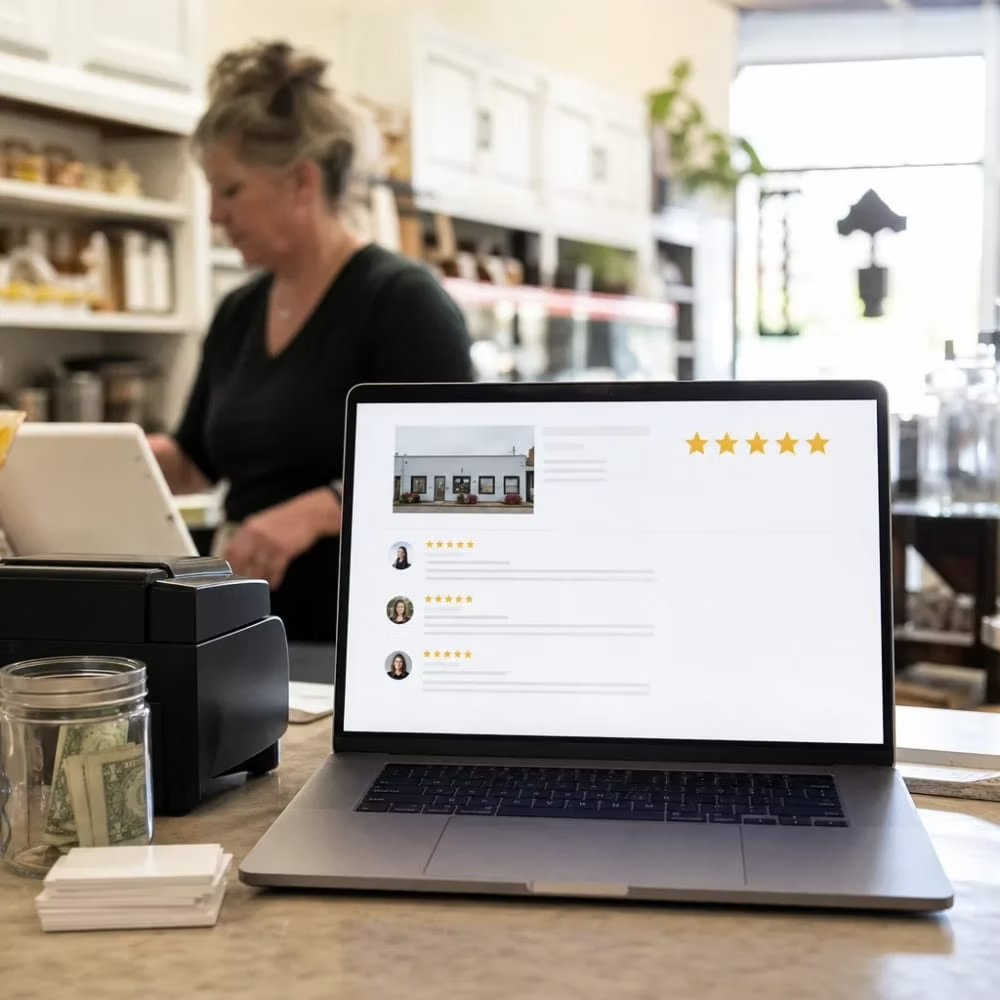
Your newest review is months old. A customer scrolling your profile sees that and wonders if you're still open, or still any good.
A bad review is sitting there with no reply. Silence reads like you didn't care, even if you did.
Your star rating slipped after one rough stretch. A few unhappy customers in a row can pull down a rating that took years to build.
The business down the street has far more reviews than you do. When someone in Lincoln compares two options side by side, the one with more recent reviews usually looks like the safer bet.
You find out about new reviews by accident. If a friend has to tell you someone left you one star, nobody is watching your profiles.
Happy customers say they'll leave a review, and then they don't. They mean it. They just forget once they walk out the door.
You're writing replies at 11 at night after closing. Or you aren't writing them at all, because there's never time.
If two or three of those sound familiar, the problem isn't your service. Nobody owns the job of asking for reviews and answering them. That job doesn't do itself, and it's easy to push off when you're the one running the register, the schedule, and the books.
Picture a Lincoln auto shop that does great work. The owner gets thanked at the counter every day. But the Google profile shows twelve reviews, the last one from spring, and a three-star complaint from a customer who waited too long for a part. Nobody answered it. A new customer searching for a shop sees that complaint first. The shop didn't do anything wrong that week. It just never asked its happy customers to say so online.
If you already work with a full marketing agency for local search, ask whether anyone there reads and answers your reviews. It's easy for that job to fall through the cracks between ads, websites, and everything else.
Now the honest part. You may not need this yet. If you see a small number of customers, get a review here and there, and can spare a few minutes each week to reply to every one, you can handle it yourself. Set a reminder, answer every review within a few days, and ask your best customers face to face. That works fine at low volume.
It stops working when reviews come in faster than you can track them, when they're spread across three platforms, or when one bad review is already costing you calls. That's the point where paying someone to watch, ask, and reply starts to earn its keep.
That same focus carries through the practical marketing agency guidance our team provides to local families.
A monthly plan isn't the right answer for every business. Here are the cases where we'd tell you to hold off, even though it means you don't hire us.
Say five people in a row complain about long waits, a rude front desk, or a part that keeps failing. Better replies won't fix that. More review requests will just bring in more of the same complaint. Fix the thing first. Once customers stop running into it, asking for reviews starts working for you, not against you.
If your hours are wrong, your listing isn't verified, or your business shows up in the wrong spot on the map, reviews aren't your first job. Getting the profile itself in shape comes first, and that's its own service, Google Business Profile Optimization. Start there, then decide on reviews.
Some Lincoln businesses run on a handful of long-term clients and word of mouth. Think of a commercial contractor with six steady accounts, or a bookkeeper who only takes referrals. Those clients aren't comparing star ratings before they call. A few good reviews still help, but paying every month to grow them probably won't pay you back.
If your name or location is changing in the next few months, wait. Reviews tied to a profile you're about to shut down or merge are a poor place to put money. Sort out the change, then build on the profile you'll keep.
Paid reviews, fake reviews from friends, and tricks to hide honest complaints break platform rules. They can get reviews pulled or a profile flagged. Real review management means asking real customers and answering what they say. If a review is false and harmful, that's a legal matter, and as noted above, the lawyer's fee isn't part of a monthly plan.
Not sure where you land? Try a simple 30-day test before you sign up for anything:
If reviews are trickling in, you're keeping up, and customers find you through friends, keep doing it yourself. If you're falling behind, or new customers keep saying they picked you, or almost didn't, because of your reviews, that's your answer too. Either way, you'll be deciding from your own numbers, not a sales pitch.
Once you're on a plan, the work doesn't show up in one big burst. It's small, steady jobs done every month so your profiles never go quiet. Here's how the pieces fit together and where you still come in.
Your review profiles get checked so new reviews don't sit there unseen. You stop learning about a one-star review from a friend.
Review requests go out by text and email templates. If your point-of-sale system is connected, a request can go out on its own after a sale. If it isn't, requests run from your customer list instead.
Replies get drafted for good reviews and bad ones. On an automated setup, short replies follow set patterns. With custom replies, each one is written by hand and speaks to what that customer said.
When a negative review lands, it gets flagged to you. You know what happened with that customer, and sometimes the right move is a phone call before any public reply goes up.
Two platform rules shape how the asking works. Google doesn't allow you to ask only your happy customers for reviews, so every customer gets the same request. Yelp goes further and asks businesses not to request reviews at all. On Yelp, the job is watching and replying, not asking. Anyone who tells you they can get around those rules is putting your profile at risk.
You also won't get passed around. I'm the only client-facing person in this business and I handle every role, so the person you talk to is the same person drafting your replies. If a reply doesn't sound like you, there's one person to tell, and no hand-offs for your feedback to get lost in.
Your part stays small, but it matters. Keep your customer list or checkout system current so requests reach real people. When a bad review gets flagged to you, look at it soon. You're the one who knows whether the customer has a point.
To judge whether it's working, skip the vanity numbers and watch these four in your own profiles each month:
Be patient with the trend. Reviews build over months, not days. A Lincoln shop that sees a few dozen customers a month might add only a handful of reviews, and that's normal. Look at three months side by side before you decide anything. Reviews are one signal among many in local search. Nobody can promise they'll push you to the top of the map on their own. What they can do is make sure the next person comparing you to a competitor sees recent reviews and an owner who answers.
You already know the three things that move a plan around our $200-$600 per month range: automated or hand-written replies, a point-of-sale hookup, and how many reviews you get. Here's how to put your own numbers to them in about 15 minutes, before you talk to anyone.
Start with volume, because it tells you more than your type of business does. Count every review from the last 90 days across your profiles. Divide by three to get your monthly number. Then count how many really needed a thoughtful answer, like a complaint, a long story, or a question. A profile with 40 short five-star reviews a month is a very different job from one with 10 detailed reviews where three are upset.
That second count tells you whether hand-written replies are worth paying for. If most of your reviews are quick thumbs-ups, simple replies are fine and keep your cost down. If people write about specific visits, or you work in health care where a careless public reply can say too much about a patient, a person writing each answer is worth the extra money.
Next, check your checkout system. Can it send texts or emails after a sale, or at least export a customer list with phone numbers and email addresses? If it can, connecting it means requests go out without anyone remembering to send them. If it can't, requests can still run from a list, and you skip that extra setup work.
Now do the math that matters. Figure out what one new customer is worth to you over a year. A Lincoln dental office might keep a patient for years. A lunch spot might see someone a few times a month. Then ask how many extra customers a month it would take to cover the plan. If one or two new customers pays for it, the decision is easy. If you'd need dozens, the retainer probably isn't your best spend right now.
Whoever you talk to, us or anyone else, ask these before you sign:
A provider who answers those plainly is one you can budget around. If the answers get vague, the bill usually does too.
A reputation management company watches your reviews, asks customers to leave them, and replies to what comes in. It is not about hiding bad reviews or making your business look perfect. It is steady, ongoing work across sites like Google, Yelp, and Facebook so nothing sits unanswered. For a busy Lincoln business, that means someone is checking profiles even on your slowest week.
Yes, every review gets a reply drafted, good or bad. Simple five-star reviews can get a short, templated response. Longer or upset reviews get more thought, especially if the customer raised a specific problem. The goal is that nothing goes unanswered, whether it is a quick thank-you or a complaint that needs a careful reply.
Yes, the type of reply you choose can shift as your review volume or needs change. A business with mostly quick five-star reviews can start with automated replies to keep costs down. If reviews start getting more detailed, or a few turn into real complaints, moving to custom hand-written replies makes sense at that point.