Restoration Search Strategy
Local SEO vs. Organic SEO for Restoration Companies: What's the Difference?
Map Pack cash flow versus organic authority—how restoration owners decide where every SEO dollar goes, and when to shift from survival to scale.
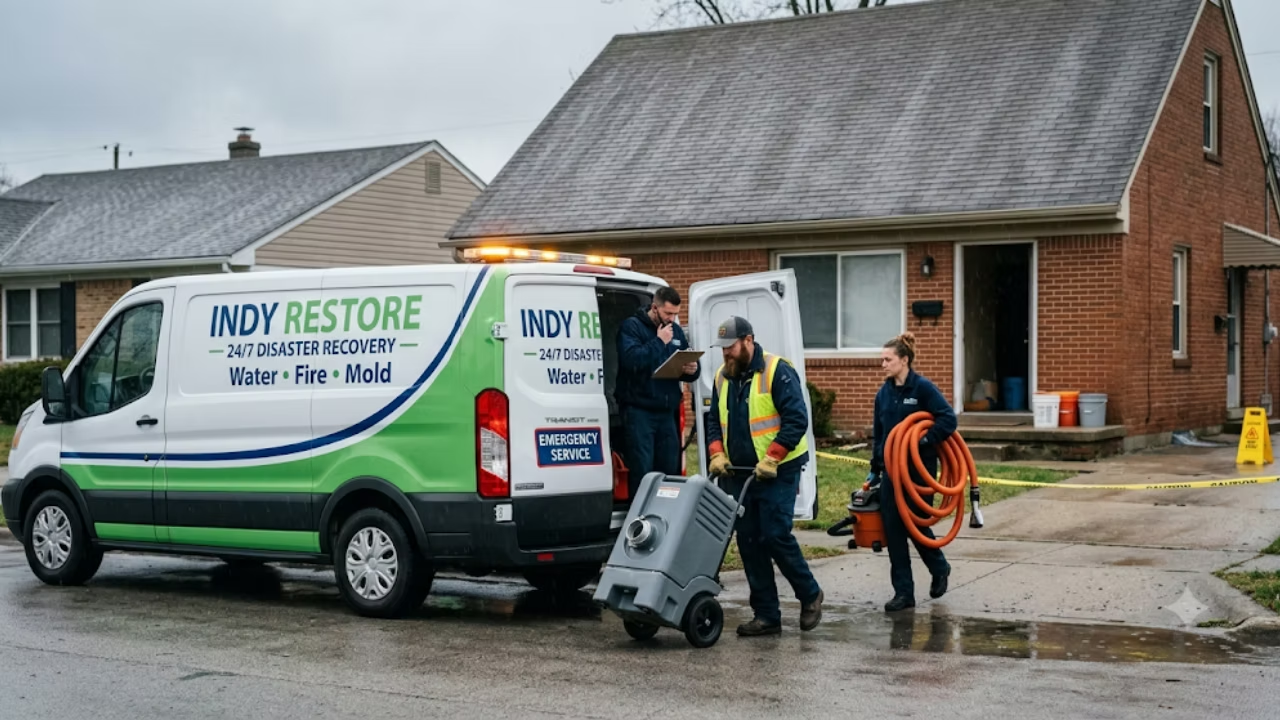
If you run an independent disaster restoration company, you already know the harsh reality of digital marketing. The competition in your service area is cutthroat, and the cost per click for terms like "water damage restoration" can easily burn through your marketing budget before lunch.
When a homeowner is standing in three inches of water at 2:00 AM, they aren't window shopping. They are making a panic decision based on who shows up first on their phone screen. That extreme urgency makes ranking on Google the single most critical driver of revenue for your business.
But as you look into search engine optimization, you quickly hit a wall of jargon. Agencies pitch you on "Google Business Profiles," "domain authority," and "content marketing." Ultimately, it all boils down to one primary battleground: local seo vs organic seo restoration strategies.
Understanding the difference between these two—and knowing exactly when and where to deploy your capital—is what separates the guys running two trucks from the dominant players buying up market share. Let's break down exactly how the search engine results page (SERP) works, the difference in search intent, and how to build a marketing machine that keeps your dispatch board full.
Anatomy of a Google Search: Breaking Down the SERP
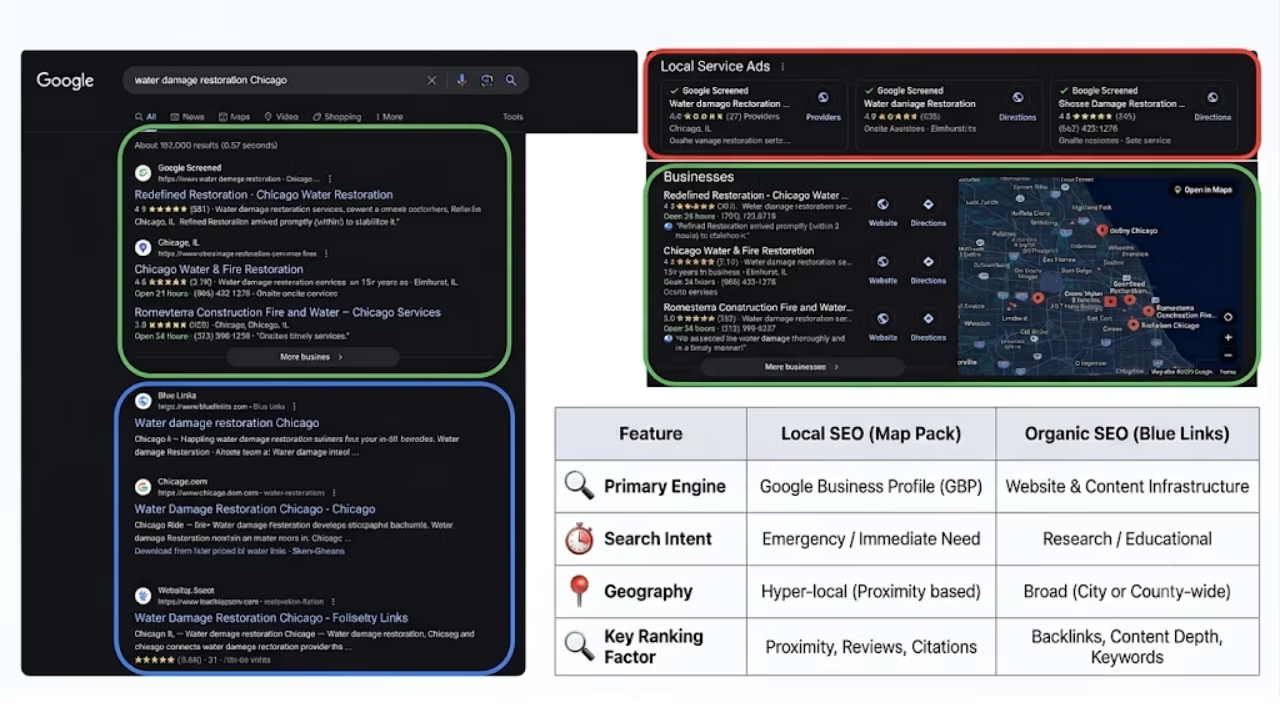
To understand where your marketing dollars are going, you have to look at the Google results page through the eyes of a desperate property owner. When someone searches for "fire damage cleanup" or "mold remediation," Google essentially splits the page into two distinct ecosystems.
Here is exactly what your potential customer sees, and how the real estate is divided.
Search Results Stack
"fire damage cleanup near me"
Paid Ads
CPC landmines—skipped by many emergency searchers
Local Pack (Map Pack)
Powered by GBP — where emergency calls convert
Organic Results (Blue Links)
Powered by your website — where research traffic lands
The Local Pack (The "Map Pack")
Directly below the paid Google Ads sits the Local Pack, commonly referred to as the Map Pack. This is a highly visual, boxed-in section featuring a map and typically three local business listings.
What it looks like:
- A localized map pinpointing service areas or office locations.
- The business name, star rating, and review count.
- Contact buttons designed for mobile (Call, Directions, Website).
- Hours of operation and a brief snippet of services.
The Local Pack is powered by your Google Business Profile (GBP), not your website's main pages. Google uses proximity (how close the searcher is to your business), relevance, and prominence (your reviews and citations) to decide who gets these coveted three spots. If you are an IICRC certified firm looking for emergency calls, this is your holy grail.
The Organic Results (The "Blue Links")
Directly below the Map Pack is the traditional Organic SEO section. These are the classic "blue links" that most people associate with search engines.
What it looks like:
- A blue, clickable meta title.
- A brief, two-line meta description explaining the page content.
- Links to specific service pages, blog posts, or educational resources.
- FAQ rich snippets or indented sub-pages.
Unlike the Map Pack, organic results are driven entirely by your website's infrastructure, content quality, and backlink profile. Google crawls your site to determine if you are an authoritative source of information. While proximity matters slightly, organic results are much more heavily influenced by the actual depth of your content.
Search Intent: Emergency Response vs. The Research Phase
The biggest difference between Local SEO and Organic SEO isn't just where you appear on the page. It's why the user is searching in the first place. In the restoration industry, understanding "search intent" is the key to capturing high-margin jobs.
Local SEO
Captures the "Panic Search"
Immediate. Localized. Urgent. The searcher needs boots on the ground—now.
"water extraction near me"
Organic SEO
Captures the "Educated Consumer"
Research. Discovery. Trust-building. The searcher is gathering answers before they hire.
"Does home insurance cover mold?"
Local SEO Captures the "Panic Search"
Local SEO dominates when the searcher has an immediate, localized, and urgent need. Google's algorithm is smart enough to know that a search like "water extraction near me" or "emergency plumber [City]" requires local boots on the ground immediately.
When a property manager walks into a commercial building and finds Category 3 water spewing from a backed-up sewer line, they aren't reading blog posts. They are typing "sewage cleanup" into their iPhone, skipping the ads, looking at the Map Pack, and calling the first company with 50+ five-star reviews.
Local searches are highly transactional. The intent is: "I need a truck with extractors and dehumidifiers at my property right now." Optimizing for Local SEO means ensuring your phone number is front and center when chaos strikes.
Organic SEO Captures the "Educated Consumer"
Organic SEO shines during the research and discovery phase. Not every restoration job is an immediate emergency. Many highly profitable jobs, like large-scale mold remediation or complex fire damage restoration, start with a homeowner asking questions.
A homeowner might notice a weird smell in their crawlspace or see soot webbing in the corners of their ceiling weeks after a small kitchen fire. They turn to Google and search: "Does home insurance cover mold damage?" or "Is soot dangerous to breathe?"
These informational queries trigger Organic results. If your website has a deeply informative, 1,500-word article explaining the dangers of airborne soot particulates and the proper use of HEPA air scrubbers, you win their trust. By answering their questions thoroughly, you position your brand as the local authority. When they finally decide to hire a professional, they call the expert who educated them.
The Strategy: Where Should a Restoration Contractor Invest?
When consulting with independent restoration owners, the most common question we get is: "Should I be writing blog posts or getting more Google reviews?" The answer is both, but the timing of your investment matters immensely.
Here is the exact playbook we use to scale disaster restoration companies from their first truck to a dominant fleet.
Capital Allocation Over Time
Phase 1 — Survive & Cash Flow
80% Local / 20% Organic
Phase 2 — Dominate & Scale
Shift toward Organic moat
Phase 1: Survive and Cash Flow (The 80/20 Rule)
If you are a new restoration company, or if your phone isn't ringing consistently, you must dedicate 80% of your SEO effort to Local SEO first.
Local SEO generates cash flow. It puts you in front of the people who have an active disaster and a credit card (or insurance claim) ready to go. To dominate the local pack, you need to execute on these tactical fronts:
Claim and Optimize Your GBP
Completely fill out your Google Business Profile. Add your IICRC certifications, high-quality photos of your branded trucks, and pictures of your team setting up air movers.
Relentless Review Generation
You need a systematic way to get 5-star reviews from every happy customer. When you sign off on the final dry logs, hand the homeowner an iPad or send an automated SMS link asking for a review.
Build Local Citations
Ensure your Name, Address, and Phone number (NAP) are identical across Yelp, Angi, local chambers of commerce, and industry directories. Consistency builds trust with Google's algorithm.
Post GBP Updates
Treat your Google Business Profile like a social media feed. Post weekly updates showcasing recent jobs, thermal imaging before-and-afters, or safety tips.
By hyper-focusing on the Map Pack, you start catching those highly lucrative, late-night emergency water and fire calls. For a deeper dive into dominating the Map Pack, check out our comprehensive guide: Local SEO for Restoration Companies.
Phase 2: Dominate and Scale (Building the Organic Moat)
Once your Local SEO is generating consistent leads and cash flow, it is time to pivot your budget toward Organic SEO. Why? Because Local SEO has a geographic ceiling. You can only rank in the Map Pack for a certain radius around your physical office address.
Organic SEO allows you to break out of your immediate zip code. It allows you to cast a massive net across your entire service area, targeting specific neighborhoods, suburbs, and surrounding counties.
Here is how you build an organic moat that competitors can't cross:
Build Dedicated Service Pages
Don't just have one generic "Services" page. You need a dedicated, 1,000-word page for Water Damage, another for Fire Damage, another for Mold Remediation, and another for Biohazard Cleanup.
Create City-Specific Landing Pages
If your office is in Dallas, but you service Plano, Frisco, and McKinney, you need highly optimized pages for "Water Damage Restoration Plano," etc.
Develop Authority Content
Write blog posts that answer the exact questions your technicians get in the field. Explain the drying process, the difference between Category 1 and Category 3 water, and how the insurance claims process works.
Earn High-Quality Backlinks
Reach out to local plumbers, real estate agents, and insurance adjusters. If they link to your website as a trusted resource, Google views your site as a heavy hitter in the local market.
Organic SEO is a long-term play. It takes 6 to 12 months to see massive returns. But once your service pages and blogs start ranking at the top of the blue links, you generate free, highly-qualified traffic 24/7 without paying Google a dime for ads.
Synergy: How Local and Organic SEO Work Together
The most successful restoration marketing campaigns don't view local and organic SEO as separate silos. They understand that the two disciplines feed off each other in a powerful synergy.
You cannot have a truly dominant Map Pack presence if your organic website is weak, slow, and thin on content. Conversely, it is incredibly difficult to rank your website organically if Google doesn't trust your local business entity.
Local Citations
BBB, Chamber, directories
Feed backlinks into organic
Organic Authority
Content + Backlinks
Lift Map Pack prominence
How Earning Local Citations Boosts Organic Rank
When you build local citations for your Local SEO strategy—getting listed in the Better Business Bureau, the local Chamber of Commerce, and contractor directories—you are also building powerful backlinks to your website. These local backlinks tell Google's organic algorithm that your website represents a real, trusted business. This pushes your organic "blue links" higher up the page.
How Organic Authority Lifts the Map Pack
Google connects your website to your Google Business Profile. If your website has massive "domain authority" because you've written incredible content about the science of structural drying and earned links from industry associations, Google transfers that trust to your map listing. High organic authority is often the tie-breaker that pushes a restoration company from the #4 spot in the maps (invisible) to the #1 spot (making millions).
Furthermore, the content on your organic website provides context for the map pack. If someone searches for a highly specific term like "smoke odor removal company," Google will look at your organic website to see if you have a page dedicated to smoke odor removal. If you do, it makes your Map Pack listing infinitely more likely to show up for that specific query.
Stop Guessing. Start Dominating Your Local Market.
Understanding the nuances of local seo vs organic seo restoration marketing is critical, but actually executing it while running a 24/7 emergency business is nearly impossible. You should be focused on dispatching crews, negotiating with insurance adjusters, and managing cash flow—not writing meta descriptions and building citations.
The competition is already investing heavily to outrank you. Every day your business isn't at the top of the Map Pack and the Organic results, you are handing high-margin water and fire jobs directly to your competitors.
Don't let technical SEO hurdles hold your business back from its true growth potential. It's time to partner with an agency that speaks your language, knows the difference between a dehumidifier and an air scrubber, and understands the urgency of a 3 AM lead.
Ready to dominate your service area and flood your dispatch board with exclusive, high-intent leads?
Schedule a Free SEO Consultation with Our Restoration Marketing Experts Today and let us build a customized Local and Organic SEO roadmap specifically designed for your restoration business.